


EPP Aluminum Charge Pipes | 2017+ Ford Fusion Sport 2.7L EcoBoost
- In stock, ready to ship
- Inventory on the way
Upgrade Your Post-Turbo Piping
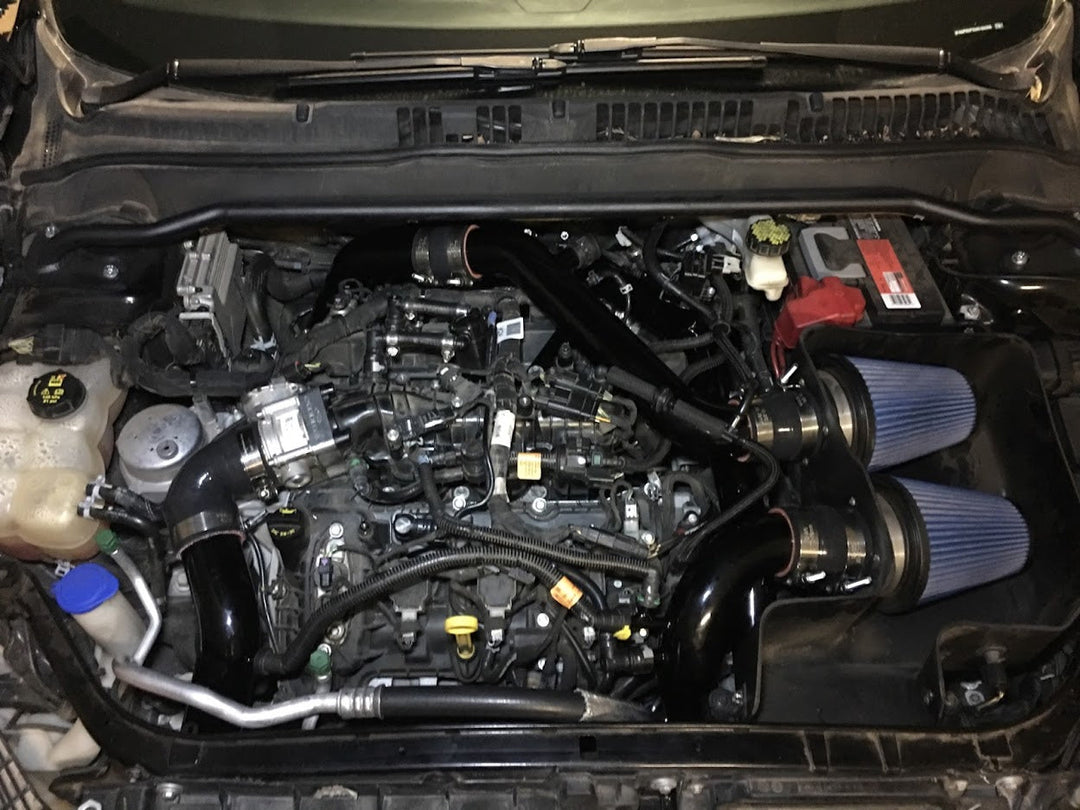
These aluminum charge pipes replace the factory plastic and rubber piping from your throttle body to intercooler and intercooler to turbo output. Over time, factory pipes soften from heat and boost pressure, causing leaks and lost power.
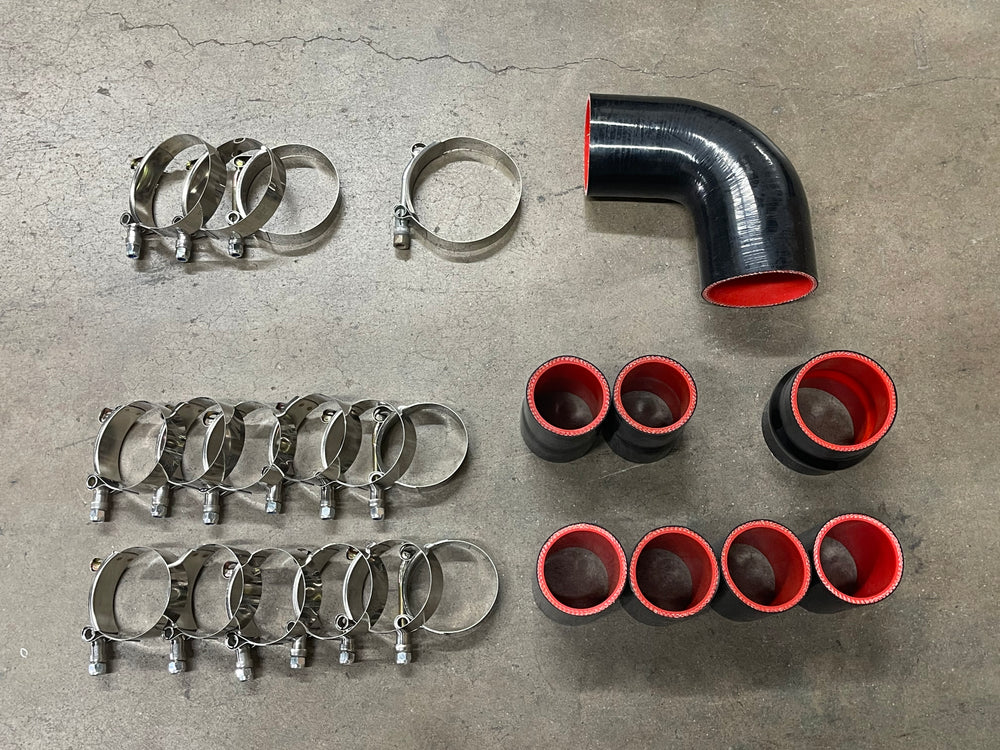
EPP charge pipes are mandrel-bent aluminum with 4-ply silicone hoses and T-bolt clamps — built to hold boost reliably.
No performance gains claimed. These pipes are about durability and reliability, not horsepower. They replace factory parts that degrade and fail over time, keeping your boost where it belongs.
Fits These Vehicles
- 2017+ Ford Fusion Sport 2.7L EcoBoost
- 2017+ Lincoln MKZ 2.7L and 3.0L
What's in the Kit
- Aluminum charge pipes (throttle body to intercooler, intercooler to turbo)
- 4-ply silicone hoses
- All T-bolt clamps
Options
- Blow-Off Valve: Factory BOV mounts (recirculate or vent-to-atmosphere) | Tial BOV
- Finish: Raw aluminum | Gloss Black | Crinkle Black | Satin Black
Install Notes
The charge pipe 90-degree 2.75"-to-2.5" throttle body hose will need trimming: approximately 2.75" on the 2.5" side, and 2.25" on the 2.75" side with a spacer (or 1.5" without spacer).
Watch the install video: Fusion Sport Intake & Charge Pipe Install
Lead Times & Policies
- Uncoated pipes: Friday afternoons are our ship day
- Powder coated: 2-3 weeks for powder coat - then ships on Friday
Wash and blow out all pipes before installation. Raw pipes will have machining marks — choose powder coat for a clean finish. Custom made to order. Not eligible for refunds or returns.
Installation Guide
Download Fusion Sport 2.7L EcoBoost Installation Guide (PDF)
⚙ INSTALLING AN AFTERMARKET BOV? READ THIS FIRST
This applies if you selected a Tial Q, TurboXS RFL, or are running your own valve. Chose Factory BOV Mounts? Skip this section — your stock valves bolt straight onto our pipes.
1. Your factory bypass valve stays in the car — just not on the pipe.
The 2.7L EcoBoost uses one electronic bypass valve, and the PCM monitors its circuit full-time. Once your aftermarket BOV takes over, the factory valve no longer mounts to the charge pipe — but it must stay plugged into its harness connector — zip-tie it up out of the way of belts and exhaust heat. Unplug it and you'll get a check-engine light (P0035 — Bypass Valve Control Circuit) that won't clear until the circuit is restored. Keep it plugged in and there's no code, no tune, no resistor tricks.
2. Your new BOV needs a vacuum signal — and this engine doesn't have one waiting.
Because the factory valves are electronic, there's no existing vacuum line to borrow. Tap a full-time manifold vacuum source behind (downstream of) the throttle body — tee into an intake-manifold vacuum line or use a manifold port — and run it to your BOV's reference port. At idle, manifold vacuum preloads the valve; when you lift off the throttle under boost, that pressure swing snaps it open. Use the manifold tap, not the brake booster line. Keep the line clear of exhaust heat and clamp both ends. (Vacuum fittings not included.)
3. Why the 10 psi spring — it's matched to idle vacuum, not boost.
A 10 psi spring is not a "10 psi of boost" spring. The Tial Q is a pressure-balanced valve: under boost, charge pressure pushes on both sides of the piston at once, so boost level has almost nothing to do with holding the valve shut. The spring's only job is to keep the valve seated against idle vacuum pulling on the diaphragm. These engines idle at roughly 19–20 inHg — right about 10 psi of pull — so the 10 psi spring holds the valve quietly closed at idle and still releases instantly on throttle lift. A lighter spring lets idle vacuum suck the valve open (leaks and rough idle); a heavier one delays venting and brings back the flutter you're trying to eliminate. The 10 psi spring is correct whether you're on stock boost or a tuned setup.
Helpful videos